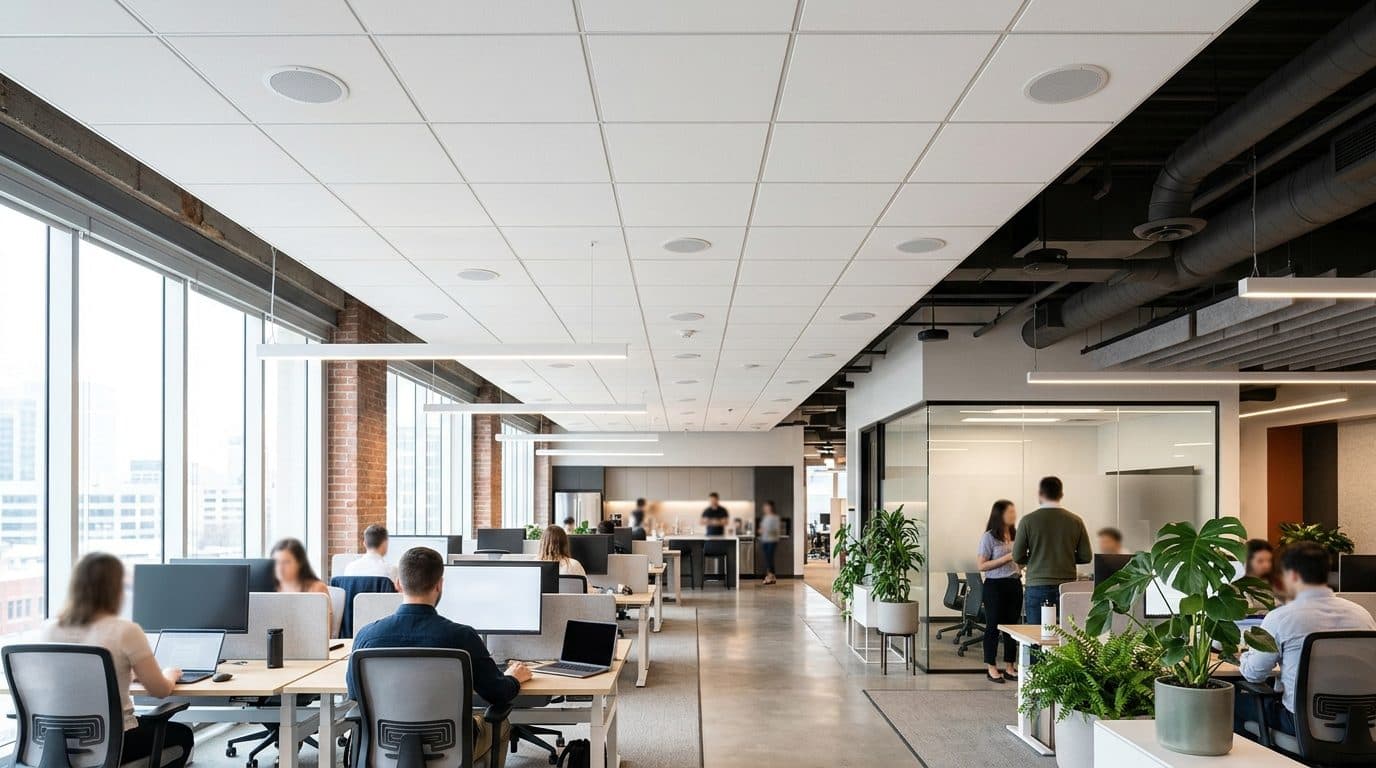
Sound masking consulting is the planning work that decides whether a space needs masking, what it should achieve, and how the system fits with the rest of the build. Here is what a consultant does at each step and the signs your office needs one.
Sound masking consulting is the work of assessing a space, setting acoustic goals, designing a sound masking system and coordinating it with the other trades so it performs as intended. An office usually needs it when people can clearly overhear conversations they shouldn't, which is common in open plans, glass-walled rooms and spaces with hard finishes.
Sound masking is a low, even background sound, played through small speakers usually above the ceiling, that is tuned to cover the frequencies of human speech. It doesn't cancel noise. It makes nearby conversations less intelligible, so they are less distracting and less likely to be understood by the wrong person.
What does a sound masking consultant actually do?
A sound masking consultant decides whether masking is the right answer, defines what it needs to achieve, and makes sure the design survives construction. The equipment matters, but most problems with masking come from poor planning, not poor speakers.
The work usually falls into four steps: assessing the space, setting goals, designing the system and coordinating with the other trades. Each one shapes the next.
How does a consultant assess the space?
The assessment starts with how the space is built and how people use it. A consultant looks at ceiling type and height, wall construction, glass, flooring, furniture layout and where private conversations happen.
In an existing office, this often includes walking the floor during a normal working day and listening for where speech carries. In a new build or fit-out, it means reviewing architectural drawings, reflected ceiling plans and the furniture plan before anything is fixed.
The assessment also asks a simple question: is masking the right tool? Sometimes the real problem is a wall that stops at the ceiling tile, a missing door seal or a room with no absorptive surfaces. Masking works best as one part of acoustic design, alongside absorbing sound and blocking it.
How do you set goals for sound masking?
Goals should be written in terms of what people need, not what the equipment does. Typical goals include keeping HR and leadership conversations private, reducing distraction in open work areas, or meeting confidentiality expectations in client-facing areas.
Different zones need different outcomes. An open workspace may need a comfortable level that reduces distraction, while an area next to private offices may need more coverage to protect speech privacy. Agreeing on zones early prevents a single setting that suits nobody.
This is also when the team agrees how success will be checked. A good consultant plans to measure and tune the system after it is installed, rather than switching it on at a default level.
What goes into designing a sound masking system?
The design sets out speaker layout, zoning, control and how the system will be tuned. Speaker spacing depends on ceiling height and type, and open ceilings need a different approach from suspended tile ceilings.
The design should also cover whether the system will carry paging or background music, how zones are controlled, where equipment is racked and what power and cabling it needs. Because we're not tied to any brand, we recommend the system that fits the space and the way the client wants to run it.
A clear design gives contractors something firm to price and build against. Vague scopes lead to change orders and systems that don't match the original intent.
Why does sound masking need coordination with other trades?
Masking speakers share the ceiling with lighting, sprinklers, HVAC diffusers, Wi-Fi access points, security devices and AV equipment. Without coordination, speakers end up moved, blocked or left out when the ceiling plan changes.
A consultant tracks the masking layout against the reflected ceiling plan, confirms cabling pathways with the structured cabling scope, and agrees schedule windows with the general contractor. Installing after ceilings close is possible but usually slower and more disruptive.
Coordination continues through commissioning. The system is tuned once furniture is in and the space is close to its real condition, because finishes and furniture change how sound behaves.
What are the signs an office needs sound masking?
The clearest sign is that people can understand conversations they aren't part of. Other common signs include:
- Open plan areas where staff use headphones or leave their desks to concentrate
- Private offices or meeting rooms where conversations can be heard in the corridor
- Glass-heavy rooms and fronts, which reflect sound and often have weak seals
- Very quiet buildings, where low HVAC noise makes every voice stand out
- Hard finishes such as polished concrete, exposed ceilings and bare walls
- HR, legal, finance or medical conversations happening near shared space
- Complaints that a new office feels louder or less private than the old one
If several of these apply, it's worth an assessment before buying furniture panels or adding walls.
When should sound masking consulting start?
The best time is during design, before ceiling plans and furniture layouts are final. At that stage, masking can be planned alongside walls, finishes and other low-voltage systems at little extra effort.
It can still be added to an occupied office. That usually means planning work around business hours and accepting more limited ceiling access, so allow time for scheduling.
Frequently asked questions
Is sound masking the same as white noise?
No. White noise covers all frequencies equally and can sound harsh, while sound masking is shaped and tuned to cover speech in a way most people stop noticing.
Can sound masking fix a room with poor walls?
It can help, but it won't replace proper construction. Gaps above walls, unsealed doors and thin glass often need fixing too, and a consultant should point that out.
How long does sound masking take to install?
It depends on the size of the space and ceiling access. Planning it during construction keeps it on the normal schedule, while retrofits need extra time for after-hours work and tuning.
Does sound masking need ongoing support?
Occasionally. Levels may need adjusting after layout changes, new furniture or a change in how a zone is used.
How Phase helps
Phase Integration is a national workplace technology company. We plan, design and manage AV, networking and Wi-Fi, cabling, acoustics, lighting, cellular and security projects for offices, hotels, campuses and other commercial buildings across the country, from our headquarters in Jacksonville, Florida. For sound masking, we assess the space, set clear goals, design the system and coordinate it with the other trades, then hire specialist partners and manage the work through tuning and handover, so you have one accountable team. If you're weighing up masking for an office, our sound masking service is a good place to start the conversation.