Skip to content
Services

Workplace Optimization

Make better decisions with data

Space utilization analytics that replace guesswork with evidence about how your workplace is really used.

RoofLevel 3Level 2Level 1

Occupancy sensors that show how each space is really used.

Most workplace decisions — how much space to lease, how many rooms to build, what technology to buy — get made on assumptions. We use advanced sensors and analytics to take the guesswork out of it.

By monitoring how individual and shared spaces are actually used, you can rightsize your space and technology, minimize waste, and make long-term decisions that measurably improve the employee experience.

Data first, then decisions

Whether you're planning a new space, updating an existing office, or reconfiguring for hybrid work, we start by measuring what's actually happening — so the plan you invest in is built on evidence, not hunches.

Workplace Optimization

Optimization tools

  • Space utilization metrics
  • Occupancy and people counting
  • Desk and room booking (hoteling)
  • Meeting room analytics
  • Flow monitoring

What this covers

Space Utilization Analytics

How much space to lease, how many rooms to build, what to buy — most workplace decisions get made on assumptions. Utilization sensors replace those assumptions with evidence about how individual and shared spaces are really used.

We deploy the sensors, dashboards, and reporting that show you occupancy patterns by floor, zone, and room — the data that turns a real-estate hunch into a defensible decision.

  • Sensor networks for desks, rooms, and zones
  • Occupancy dashboards and trend reporting
  • Evidence for lease, build, and buy decisions

Occupancy Sensing & People Counting

Different questions need different sensors: people counting at entries, presence at desks, utilization in rooms. Privacy matters too — modern sensors count people without identifying them.

We match the sensing technology to the question you're answering and the privacy posture your organization requires.

  • Entry counting, desk presence, and room utilization
  • Privacy-first, non-identifying sensors
  • Flow monitoring through shared spaces

Desk & Room Booking

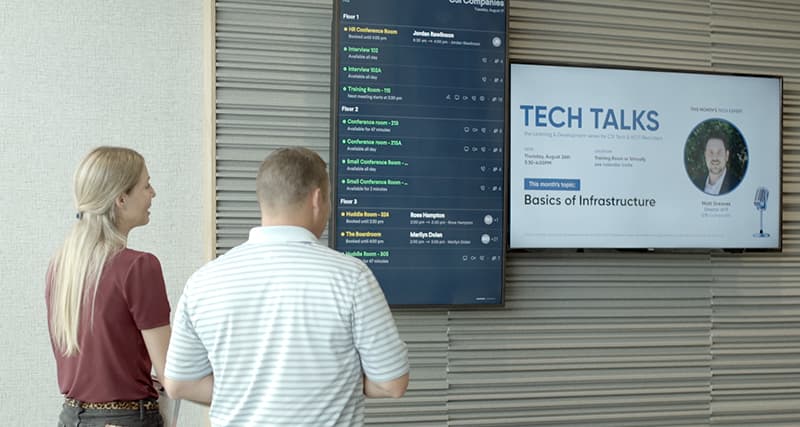
Hybrid work runs on booking: desks reserved for office days, rooms that release when nobody shows, and a map that tells people where to sit before they commute.

We implement booking platforms tied to sensors — so 'booked but empty' rooms free themselves — integrated with your calendar and the panels at each door.

  • Desk hoteling and neighborhood planning
  • Room booking with no-show auto-release
  • Calendar and room-panel integration

Meeting Room Analytics

The eight-seat rooms are always booked and the two-seat rooms sit empty — or is it the reverse? Meeting analytics show which rooms get used, by how many people, for how long.

That evidence drives the next renovation: build the rooms people need, not the ones the last floor plan guessed at.

  • Room usage, group size, and duration data
  • Right-sizing evidence for renovations
  • Technology-usage insight per room

Planning With the Data

Data is only optimization if it changes something. We help you turn utilization findings into action: reconfigured floors, right-sized leases, better room mixes, and technology budgets aimed where people actually work.

Whether you're planning a new space or tuning an existing one, the plan gets built on measurement instead of memory.

  • Findings-to-floor-plan recommendations
  • Rightsizing space and technology spend
  • Ongoing measurement after changes land

Frequently asked questions

What is space utilization analytics?
Space utilization analytics measures how desks, meeting rooms and floors are actually used, using occupancy sensors, booking data and entry data. It shows the gap between how a workplace was planned and how people really use it, so leasing and design decisions rest on evidence.
Do occupancy sensors identify people?
Sensors used for space planning are typically anonymous: they detect whether a space is in use or count how many people are in it, without recording who they are. We choose sensors and settings with privacy in mind and agree them with your team first.
How long should we measure before making decisions?
Long enough to see a normal cycle of busy and quiet days, usually at least several weeks, and longer if your hybrid schedule varies through the month. Short snapshots tend to miss the patterns that matter.
Does it work with desk and room booking?
Yes. Comparing bookings with real occupancy shows rooms booked but never used and desks that are always free, and features like automatic release of no-show bookings put that space back into use.

Tell us what you’re planning.

A new office, a hotel renovation, or systems that don’t work the way they should. Tell us about it and we’ll come back with a plan.