Ballrooms & meeting space
Rooms planners book again, and screens sponsors pay for.
Ballroom and meeting-room AV that follows every partition, and direct-view LED on the door headers, columns and corridor walls around them, sold to event groups and outside advertisers.
Enlarged section: pre-function and ballroom
Choose a note to see where it sits. Notes 1 to 3 are the screens a property can sell to event groups and advertisers.
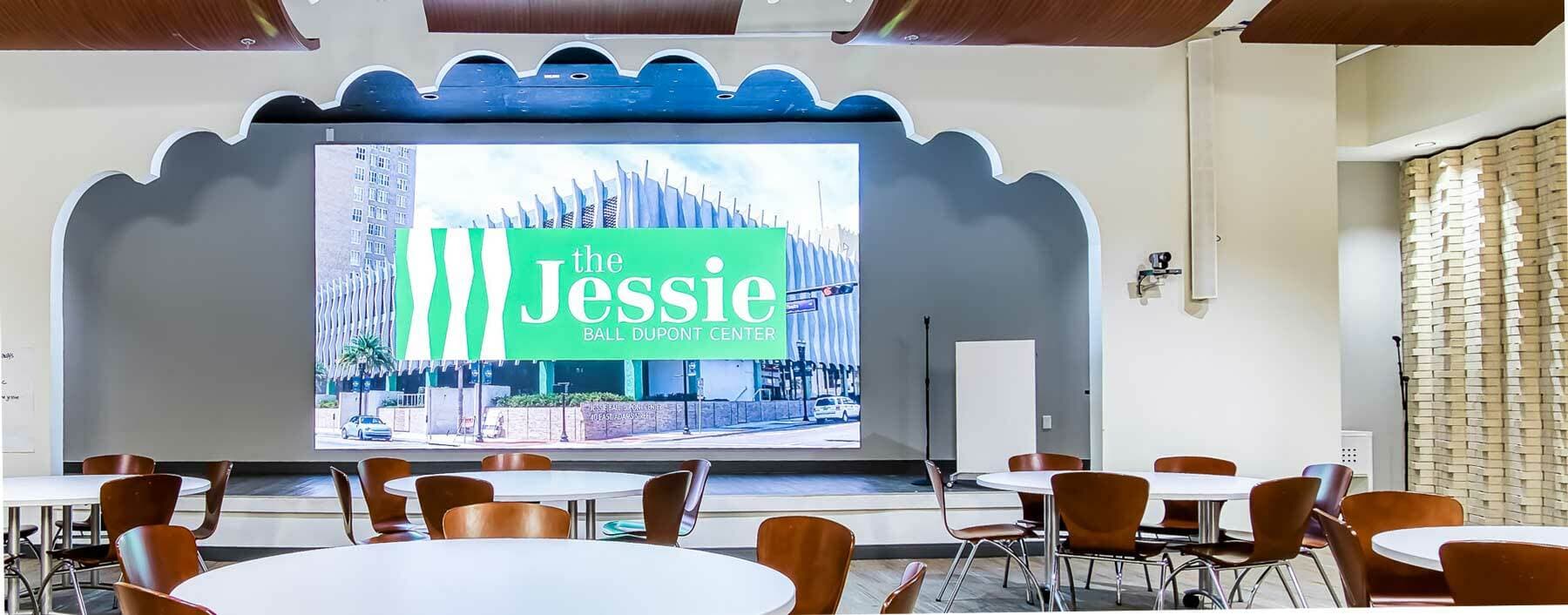
Phase Integration plans, designs and manages the technology for hotel and resort ballrooms, meeting rooms and the pre-function space around them: LED walls and projection, audio, lighting, Wi-Fi and cellular coverage, and the connections visiting production companies plug into. We run the project the way a general contractor runs a job, around the property's event calendar.
Meeting space is where a property wins group business, and more of what wins it now sits outside the ballroom doors. A growing share of our hospitality work is direct-view LED in pre-function corridors, at ballroom entrances and around columns, where it carries the branding of the group that booked the room and paid advertising from outside brands. We design those screens to be sold, not just switched on.
LED the property can sell
Hotels and resorts are turning their busiest walkways into media, from the pre-function corridor and the elevator lobby to the marquee at the entrance and the screens around the pool. A group that books the ballroom can buy its branding on the screens its attendees pass all day, and outside advertisers can buy time on the same screens between and during events. Each screen becomes inventory the sales team can price.
These screens are rarely standard sizes. The LED is built to fit the architecture: a band across a door header, a wrap around a column, a run down a corridor wall. We set the pixel pitch from how close guests walk past, plan the structure, power and data behind every surface, and set up the content system so the sales and events teams can schedule each screen by room, booking and time.
Door headers
Above ballroom and meeting-room entrances
Shallow cabinets sized to the opening, content tied to the room's booking
Column wraps
Columns in pre-function and lobby areas
Corner-joined or curved cabinets, with service access that doesn't mean taking the whole wrap down
Corridor runs
Long walls between ballrooms and meeting rooms
A fine pixel pitch for close viewing, run as one canvas or split into zones per event
Elevator lobbies
Walls facing the elevators on every event level
Screens guests read while they wait, showing the day's events and their sponsors
Escalator walls
Walls beside escalators between event levels
Tall, narrow LED read on the move, sized to the slope and the viewing angle
Registration backdrops
Behind the registration and welcome desks
A branded backdrop that changes with each group
Digital reader boards and kiosks
Outside each room and at wayfinding points
Mobile LED boards on casters, rolled to any entrance, with the room name, schedule and sponsor logo from the booking system
Outdoor marquees
At the property entrance, facing the road
Weather-rated, high-brightness LED that dims at night, sized to local sign rules
Pool areas
On the pool deck and outdoor event lawns
Weather-rated cabinets bright enough for direct sun, for poolside events and sponsor content
What makes a screen sellable
- Content scheduled by event, room and time slot
- Written content specs that advertisers can deliver to
- Play reports for each advertiser
- Brightness that holds up in daylit corridors and outdoors
- Low-profile mounting that keeps walkways within ADA limits
- Service access planned for a corridor that's never empty
What a ballroom needs
- Displays sized to the room
- An LED wall for a bright, seamless image in any light, or projection where the budget or ceiling height favors it. The image height is set from the farthest seat, and the LED pixel pitch from the nearest.
- AV that follows the partitions
- When the operable walls open or close, the screens, audio, microphones and controls combine or split with them, so Ballroom A can run on its own or as part of the whole room without anyone re-patching cables.
- Audio for every seat
- Ceiling speakers zoned with each section of the room, so speech is clear at the back table without being loud at the front, and assistive listening where the code requires it.
- Connections for visiting production
- Large events often bring their own production company. Floor boxes and wall plates for audio, video and network, show power, and rated rigging points let them tie into the room instead of running cable across it.
- Lighting scenes
- Presets for a general session, a banquet, a dance floor and the cleaning crew, on the same controls as the AV.
- Controls banquet staff can run
- A simple panel for each section: on, off, source and volume. Anything beyond that goes to the AV team.
- Wi-Fi and cellular for a full room
- Capacity for every attendee on two devices, a separate network for the event's own needs, and cell coverage in rooms that are often below grade or behind heavy walls.
- Breakout and board rooms
- Meeting rooms with video conferencing for hybrid sessions, and room signs that show what's booked and who's sponsoring it.
Planned around the event calendar
- Work around bookings
- Ballrooms and pre-function space are booked months ahead. We phase the work section by section around the calendar, so the rooms stay sellable while the project happens.
- Coordinated with your event production partner
- Many properties have an in-house AV and event production partner. We plan the permanent systems with them, so what's built into the room works with how they run shows.
- Ready to sell at opening
- Sponsor LED goes live with its content system set up, the advertiser specs written and the sales and events teams shown how to schedule it, so the screens start earning from the first event.
- Supported after opening
- Help desk, preventative maintenance and event support keep the rooms and screens ready for the next booking.
The systems we bring
- Audio Visual TechnologyBallroom LED walls and projection, sponsor LED, audio and meeting-room video conferencing
- Structured CablingFloor boxes, connection points and the cabling behind every LED surface
- Networking & Wi-FiEvent Wi-Fi with the capacity for a full house
- Acoustics & Sound MaskingSound control between divided rooms and from the corridor to the ballroom
- LightingLighting scenes for sessions, banquets and evening events
- Cellular DASCell coverage in ballrooms and lower-level meeting space
- Technical SupportEvent support, help desk and maintenance after opening
Frequently asked questions
- How do hotels make money from LED displays?
- By selling time on the screens. A group that books the ballroom can buy its branding on LED in the pre-function corridor, at the ballroom doors, in the elevator lobbies and around the registration desk, and outside advertisers can buy time on the same screens. The content system schedules each campaign by event, room and time, and play reports show each advertiser what ran.
- What size LED wall does a ballroom need?
- It depends on the room's size, its ceiling height and how far the farthest guests sit. The image height is set from the back of the room and the pixel pitch from how close the nearest guests sit. In a divisible ballroom, the screens are planned so each section works on its own and the whole room works together.
- How far can a display stick out into a hotel corridor?
- Under the ADA Standards, a wall-mounted object whose leading edge is between 27 and 80 inches above the floor can stick out no more than 4 inches into a walkway. Corridor LED is designed in low-profile cabinets, recessed into the wall, or mounted high enough to clear that zone.
- Can the AV work with operable walls in a divisible ballroom?
- Yes. The control system knows which partitions are open, from sensors in the wall track or a setting on the touch panel, and combines or splits the screens, audio, microphones and controls to match. Each section can run its own event, or the whole room can run one.
- Do visiting production companies use the house AV?
- Often they bring their own, so a ballroom should plan for both: house systems for everyday meetings and banquets, and floor boxes, wall plates, show power and rated rigging points so a visiting production company can tie into the room's audio, video and network.
- Can ballroom technology be upgraded while the hotel stays open?
- Yes. The work is phased section by section around the event calendar. LED, cabling and AV go in while a section is out of service, and each section comes back in time for its next booking.
Planning ballroom or meeting space upgrades?
Tell us about the rooms, the partitions and the walls around them, and we’ll come back with a plan for the AV, and for the LED that event groups and advertisers could pay to use.